
IDFA Artistic Director Isabel Arrate Fernandez on festival programming, geographical representation and the one Finnish classic that keeps coming back
International Documentary Film Festival in Amsterdam, IDFA, is one of the most notable stages for documentary films. The festival aims to being truly international, by giving a firm standing to films from all over the world. It has meant that the competition for slots in the programme is tough also for European films.
Text: Marjo Pipinen
Image above: Alejandro Ramirez / Finnish Film Affair
We invited Isabel Arrate Fernandez, IDFA’s Artistic Director since last year, to visit the Finnish Film Affair in Helsinki in September. She participated in the jury that awarded the best pitch award of the documentary selection, she shared her knowledge also in a panel discussion talking about festival programming.
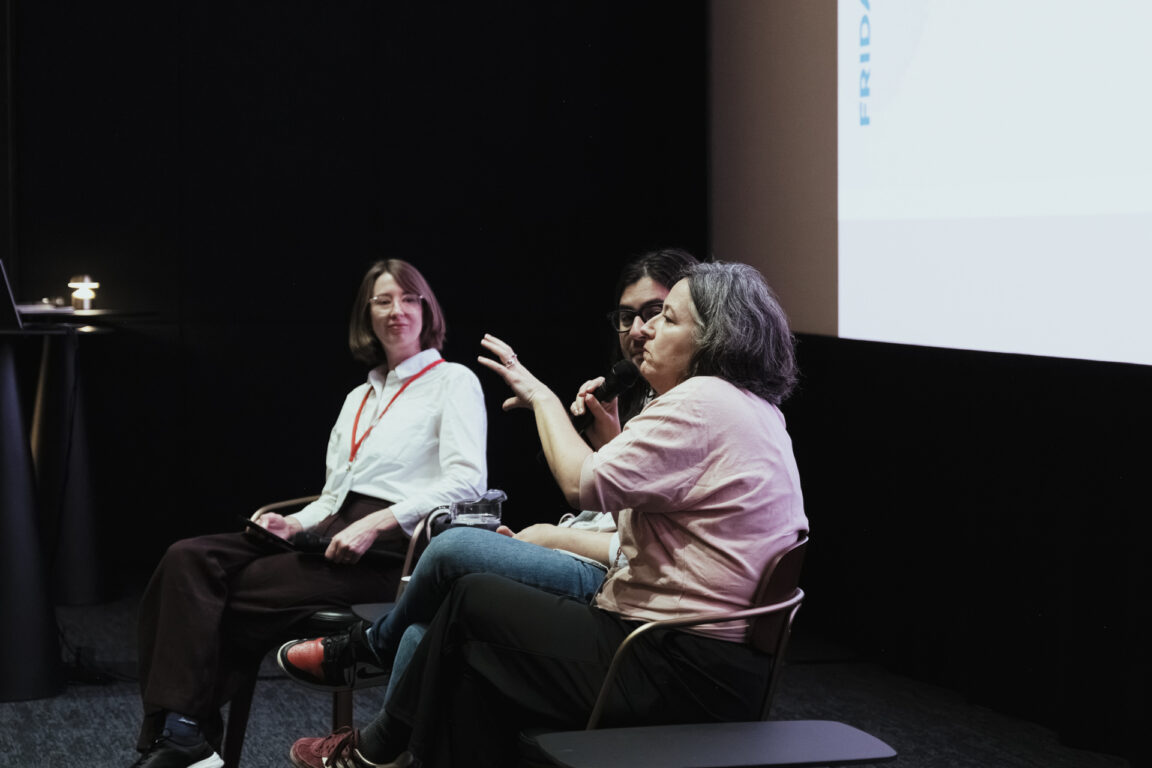
In the panel, moderated by Suvi Railo, Finnish Film Foundation’s International Promotion Advisor for Documentaries, Isabel talked about how IDFA wants to show the spectrum of what documentary film can be. The upcoming 39th edition of the festival also sees the 20th edition of DocLab, a programme committed to non-linear filmmaking, including Competitions for Immersive Non-Fiction as well as Digital Storytelling.
This year, IDFA received approximately 4,000 submissions, out of which 800 were short-form. Four programmers, each with a team of programme advisors, go through the feature-length submissions, watching each and every one of the submitted films – from start to finish, mind you! Other programmers are in charge of short film and new media selections.
And if you were wondering what the festival does with your submission fee, it’s exactly that: makes sure that each submitted film is being watched by a professional.
Isabel underlined that compiling the programme is a collaborative process where the film is what matters. The team might get acquainted with some titles at pitching forums like the Finnish Film Affair, but in the end, no personal connections help the matter if the final film is not up to par.
Sometimes it might feel like there is an “alumni effect”, familiar names getting spots in the programme year after year. But at IDFA, about a quarter of the programme consists of films by debut filmmakers, and the festival also puts a lot of emphasis on talent development through its labs and IDFA Bertha Fund.
At the end of the panel, both Isabel and co-panelist, Tribeca’s Senior Programmer Jason Gutierrez wanted to stress that not getting selected does not mean the film is bad. For whatever reasons, out of thousands of submissions, good films will get left out – and up for grabs for other great festivals! The important thing that saves everyone’s time, is that you do your research before submitting. Look at the festivals’ previous line-ups to see if the films match the type of film you are offering.
After the panel, we had a chance to talk to Isabel more closely about her views on IDFA’s selection process.
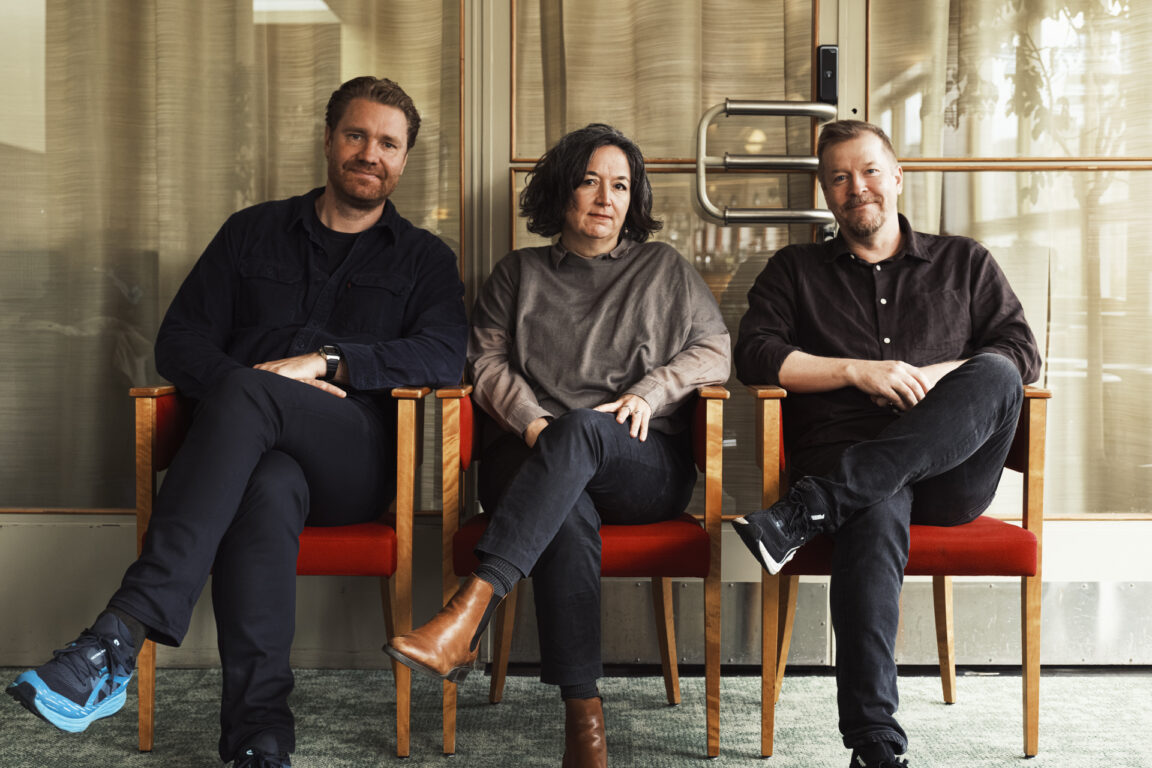
FFA doc jury: Filipp Kruusvall, Isabel Arrate Fernandez and Einari Paakkanen. Photo: Alejandro Ramirez / Finnish Film Affair
You watched the documentary pitches yesterday at the Finnish Film Affair and your jury gave the pitch prize to Anna Antsalo’s Darkness Counts (produced by Venla Hellstedt for Viisi). Any general thoughts on the pitches and the jury work?
It’s very interesting to be here because it’s the first time I am at a documentary or a film event in the Nordics. But it was also very interesting because the other jury members Einari [Paakkanen] and Filipp [Kruusvall] from Estonia are from close by so they bring an insight that I don’t have. So that exchange I really cherish.
In terms of the projects, it’s always a nice opportunity to hear filmmakers directly, particularly also when the films are not finished. And then engage in these conversations to understand more. When you select films, you look at the final result. But this gives a chance to have a better understanding of the context in which the films are being made, and also deep diving into the intentions of a filmmaker and having a conversation on what is international, what is not international.
Last year’s IDFA was your first edition as the Artistic Director. You worked very closely with the festival before [at the IDFA Bertha Fund], so was there anything that still managed to surprise you? What did you learn from this experience?
Everything! Before I was very much involved in looking at funding, filmmaking, what it is to be part of this industry from the filmmakers’ point of view. And that changed, obviously, or at least my position changed in that regard.
For me, it is a little bit of a roller coaster because it’s also a job where it’s not only about the film program. It’s also about what we are doing with the industry, and the talent department. How is the new media DocLab positioning itself? It’s my task to kind of bring it together to see where we steer it. So in that sense, it was overwhelming.
And at the same time, when you are at the festival, it suddenly starts to make sense. What you were doing before, it kind of falls into place and it was very warm and enriching.
For example, one of the things we had to deal with in Amsterdam is this change in cinemas. There are very few big cinemas that we can use, and filmmakers usually want big cinemas for the world premiere. So we do more screenings because of the cinemas being smaller. For the filmmakers, it ended up being a benefit: it meant intimate screenings, engaging in real conversations with the audience. Some of them even said that they really enjoyed that a film was visible in a festival program throughout the 10 days, there was opportunity for word of mouth.
This is an example of what you get back. I mean, I only get the positive things, unless it’s really bad! But that was a beautiful experience also because it also brings you closer to filmmakers and what it is for them when that moment comes, that engagement with the audience, after all those years of work.
It’s also good, when the smaller cinemas sell out faster because you get the buzz, the people really feel like they need to buy the tickets and go.
Our audience is very loyal, and also engaged in films, opinionated and they ask questions. Sometimes, when you do a Q&A and you just want questions, people take the first five minutes to share their thoughts. But that’s also very interesting because in the end, it’s how they are processing at the moment what they just saw.
Now, I know there’s a question that’s been asked a lot: the nationality of films and how IDFA has made an effort in selecting more films from outside of Europe. I’m not going to ask about the position of Nordic films, but just in general, what kinds of discussions do you have with your team about nationalities or geographical representation?
Listen, I know this is the hot potato, and I think it’s important to talk about it. As I see it, the world changing is very simply related to globalization and how accessing other parts of the world has changed in the last 10 years. That means that other filmmakers are approaching us and the geography of films and projects we receive is much wider.
And in order to answer to that, it has been our responsibility also to look at how we make selections and who is making the selections. It’s something that has come much more naturally in our programming than it being a very hard cut decision. In order to be able to have opinions on films that are coming from a very different context requires that you also make a team capable of responding to that. Our group of program advisors really comes from all over the world. I see it much more as us adjusting and adapting to how the industry has changed.
If you look at how things were 15 years ago, films that were maybe more relevant in a national or regional context were also crossing these northern borders. And that is something that now, with the choice being much broader, has changed.
You’re often asked what kinds of films you are looking for, but I want to flip it and ask: what are you not looking for?
Excluding films or filmmakers by definition always has a not so nice after taste. Documentary filmmakers work hard and with lots of dedication to get their films made.
The good thing is that we have different sections so we can program different kinds of films, that also speak to a variety of audiences. Deep diving into the programming has been an interesting experience, to see how our premiere sections are related to each other. What makes an International Competition film? What makes an Envision Competition film?
What is fascinating in storytelling, be it film, literature, fiction, documentary, even visual arts, is how artists and filmmakers create meaning through complex narratives and layered structures. Leading to an experience that is not only informative, but where you engage and make connections, sometimes days later, that can be a sensorial or contemplative experience.
Do you have any general reflections on the submissions you got this year?
I do not watch all 4,000 submissions. Looking at what we’ve selected, there are personal driven stories and films looking at different complexities of the present world. There are less films that are strongly character driven and more films that take a step back and look more at a totality of a neighborhood, of situation, of a feeling, including more characters. So I would almost say more contemplative because of the different voices in the story.
Another thing to remark is that we have a selection of shorts made by more experienced filmmakers, like Laura Poitras, Avi Mograbi, Kamal Aljafari. They are all making films reflecting on what is happening in their country, what is happening in the world, in the short form as an immediate form to reflect and react and say something.
I understand that you’re not so keen on highlighting specific films from the program, but would you like to say something about what you’re excited for in the future of the festival, this year or the coming years?
Well, what excites me are the films and the works. Every year they are different. I watch the films largely on my own – one week I was crying because things touched me so deeply, another week I was questioning things.
What I think is very important is to keep on finding each other and exchanging because it’s strengthening the walls that uphold this industry. And not to lose what documentary cinema is, what it can bring and what filmmakers need in that creative development. I really see that as part of our mission and our role. It’s becoming more important in the years to come because of all this changing cultural politics. In the end, what is at the core of what we do is connecting people, people with films, film people with film people, to continue strengthening and protecting that space.
Your Guest of Honor Tatiana Huezo picked Pirjo Honkasalo’s The 3 Rooms of Melancholia to her TOP 10. This is the sixth time IDFA is screening this classic film. How would you describe its legacy?
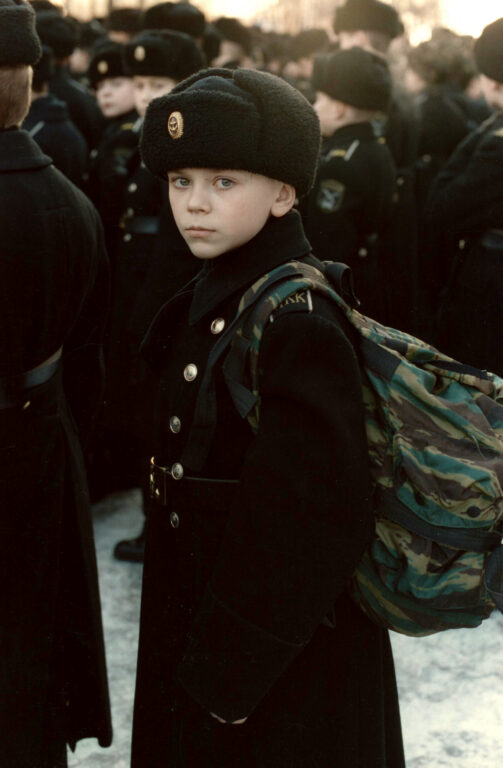
The 3 Rooms of Melancholia
In 2008, I went to the first documentary film festival in Damascus. I met Pirjo Honksalo at the airport and she taught me how to drink water without touching the bottle, while we were waiting for our visas and passports! Then I saw the most bizarre masterclass between her and Nils Pagh Andersen, about how they edited the film going each into their own sauna in between.
Working with filmmakers over the last years, this film is a reference for so many films. I’ve had so many conversations with filmmakers struggling to define or work with their different storylines, and then showing them The 3 Rooms of Melancholia just to expand their horizon and what you can do with three chapters.
I find it amazing that a filmmaker like Tatiana Huezo, from El Salvador and raised in Mexico, picks Pirjo’s film as one in her selection of films that have accompanied her over the years and shaped her as a filmmaker. I think you should watch it more often yourselves! If you don’t already. I haven’t seen it in a long time, so I will try to catch it in the cinema. I think its legacy is enormous.
Two films supported by the Finnish Film Foundation are in the IDFA Short Film Competition this year, PICNIC – In Light Invisible to the Human Eye, by Jan Ijäs, and the Swedish-Finnish doc The Bus of Broken Hearts. Filmmaker August Joensalo and producer Emilia Haukka from Aamu Film Company are pitching This Body Is My Final Address at IDFA Forum. IDFA takes place November 12–22, 2026.